Deno’s GardenMy Garden

Viburnum lantana

Genus Viburnum

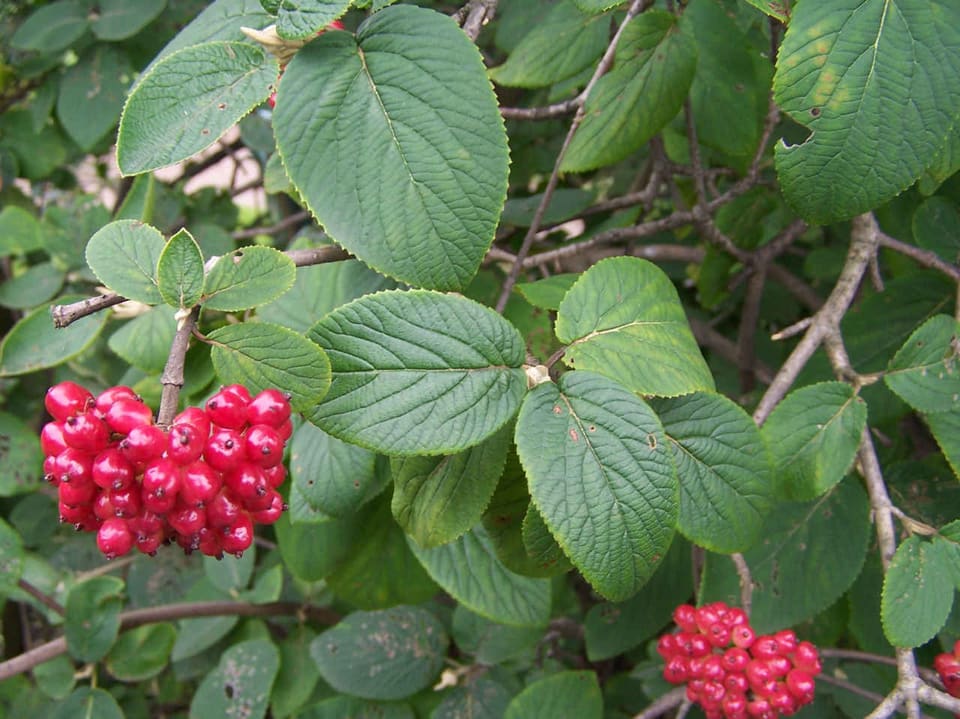
Flat clusters of bright red berries hanging from a shrub of broad deeply ribbed leaves.
FruitOpioła JerzyCC BY 2.5

About the plant

What it is and where it grows — not part of any germination protocol.

The plant

Habit
ShrubExtension Gardener Plant Toolbox
Height
10-15 ft3-4.6 mExtension Gardener Plant Toolbox
Spread
10-15 ft3-4.6 mExtension Gardener Plant Toolbox
Flower
Cream/Tan, WhiteExtension Gardener Plant Toolbox
Blooms
SpringExtension Gardener Plant Toolbox
Hardiness zones
4-7Extension Gardener Plant Toolbox

Growing conditions

Sun
Full sun; Partial ShadeExtension Gardener Plant Toolbox
Soil pH
Acid (<6.0), Neutral (6.0-8.0)Extension Gardener Plant Toolbox

Toxicity is noted only where a source states it. No note here is not a finding of safety.

Source: Extension Gardener Plant Toolbox — NC State Extension.

This source reports two treatments. Both are shown.

Protocol 1

DerivedN. C. Deno, 1993

Difficulty Moderate Rated by us, not by the source.

Start around February 10, 2027 for a May 3 last frost. Too late for spring 2027 — that needed starting on February 9, 2026.

  1. Clean the flesh off the seed

  2. Dry storage

    Duration: 180 days

  3. Cold moist stratification

    Duration: 90 daysTemperature: 40°F 4°C

  4. Warm moist stratification

    Duration: 90 daysTemperature: 70°F 21°C

  5. Cold moist stratification

    Duration: 90 daysTemperature: 40°F 4°C

  6. Warm moist stratification

    Duration: 90 daysTemperature: 70°F 21°C

    5 germinated in this phase.

Steps after step 4 run on after germination.

about 12 months from start to sowing. Then 60 days to germinate.

86% germination in 60 days.

Seed Germination Theory and Practice, 2nd ed. — N. C. Deno, 1993 · Ch. 20, Viburnum p. 228Public domain
Show the original text
Viburnum (Caprlfollaceae). Viburnums divide into two groups. The first group germ. in a 40-70 pattern. The cotyledons develop within a week or two after germination. This group is adapted to germination in spring and immediate leaf development and growth. The second group germ. in a 40-70-40 pattern with extension into a 40-70-40-70-40 pattern. Germination takes place in a cycle at 40. The seedlings must be kept at 40 for two to three months after radicle development is complete in order for the cotyledons to develop properly on shifting to 70. Puncturing. the seed coat had no effect in three species. All seed was WC for 1-2 w. Germination was stimulated by GA-3 in V. lantana germ. 40-70(86% in 2nd m)-40-70(5%) and less in 70(47%)-40(28%)- 70(3%) using seeds collected in December and WC or WC seed DS 6 m at 70 or 40. The cotyledons opened in 2nd w after germination.
Seed Germination Theory and Practice, 2nd ed., Ch. 20, Viburnum p. 228. Quoted exactly. Every value on this card comes from this record, except the difficulty rating, which is ours; the step names come from a fixed list.

Protocol 2

DerivedN. C. Deno, 1993

Difficulty High Rated by us, not by the source.

Start around June 19, 2027 for a May 3 last frost. Too late for spring 2027 — that needed starting on June 18, 2026.

  1. Clean the flesh off the seed

  2. Dry storage

    Duration: 180 days

  3. Warm moist stratification

    Duration: 90 daysTemperature: 70°F 21°C

  4. Cold moist stratification

    Duration: 90 daysTemperature: 40°F 4°C

    28 germinated in this phase.

  5. Warm moist stratification

    Duration: 90 daysTemperature: 70°F 21°C

    3 germinated in this phase.

Steps after step 3 run on after germination.

about 9 months from start to sowing. Germination time not stated; 21 days assumed.

47% germination.

Seed Germination Theory and Practice, 2nd ed. — N. C. Deno, 1993 · Ch. 20, Viburnum p. 228Public domain
Show the original text
Viburnum (Caprlfollaceae). Viburnums divide into two groups. The first group germ. in a 40-70 pattern. The cotyledons develop within a week or two after germination. This group is adapted to germination in spring and immediate leaf development and growth. The second group germ. in a 40-70-40 pattern with extension into a 40-70-40-70-40 pattern. Germination takes place in a cycle at 40. The seedlings must be kept at 40 for two to three months after radicle development is complete in order for the cotyledons to develop properly on shifting to 70. Puncturing. the seed coat had no effect in three species. All seed was WC for 1-2 w. Germination was stimulated by GA-3 in V. lantana germ. 40-70(86% in 2nd m)-40-70(5%) and less in 70(47%)-40(28%)- 70(3%) using seeds collected in December and WC or WC seed DS 6 m at 70 or 40. The cotyledons opened in 2nd w after germination.
Seed Germination Theory and Practice, 2nd ed., Ch. 20, Viburnum p. 228. Quoted exactly. Every value on this card comes from this record, except the difficulty rating, which is ours; the step names come from a fixed list.

Add to My Garden

View species page