Deno’s GardenMy Garden

Senega officinalis

Seneca Snakeroot · Senega Snakeroot · Senega-root

Family PolygalaceaeGenus Senega

Also published as Polygala senega. You are in the right place.

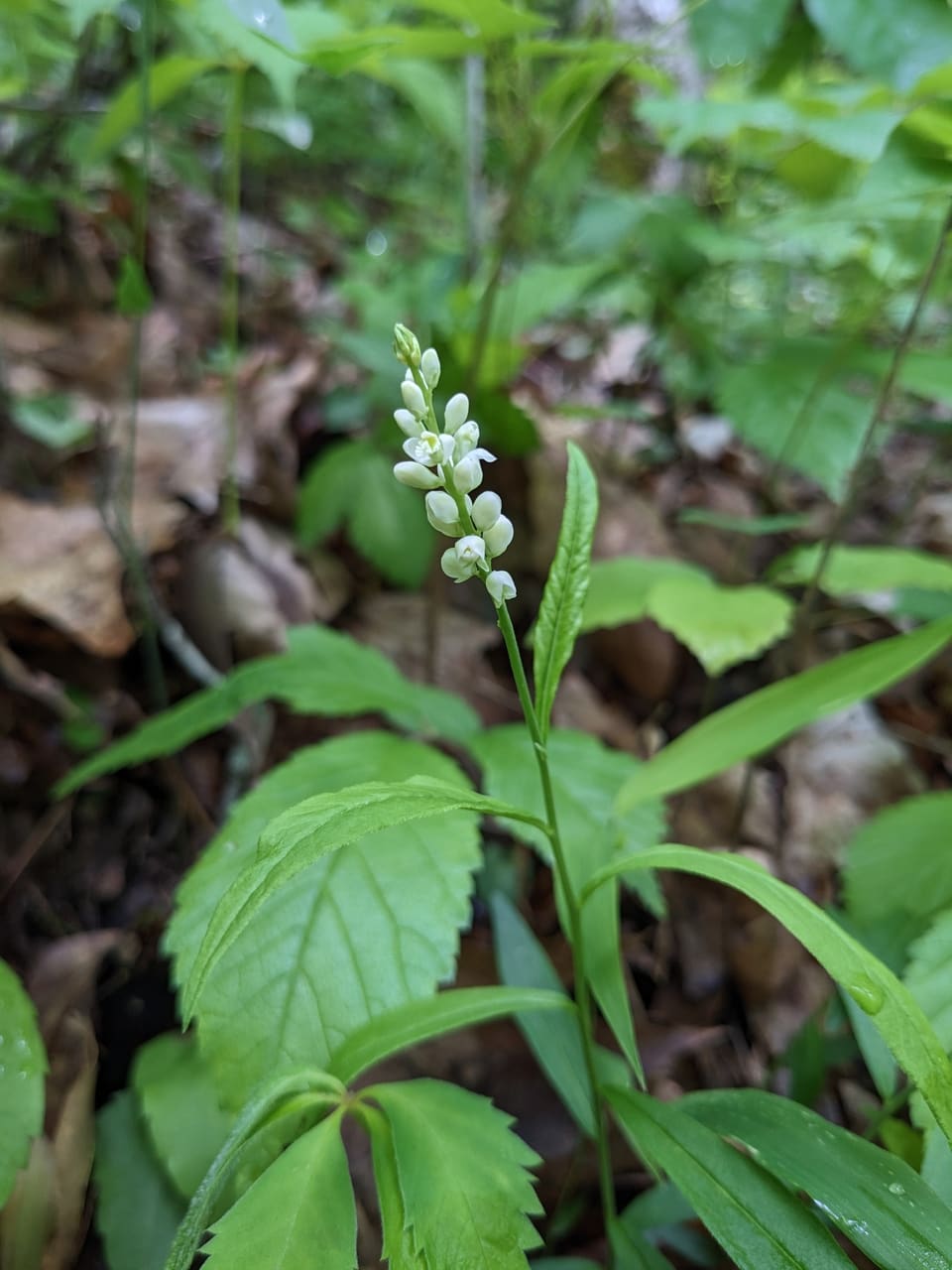
A narrow spike of small white flowers at the top of a slender stem, among woodland leaves
FlowerAlaina KrakowiakCC BY 4.0
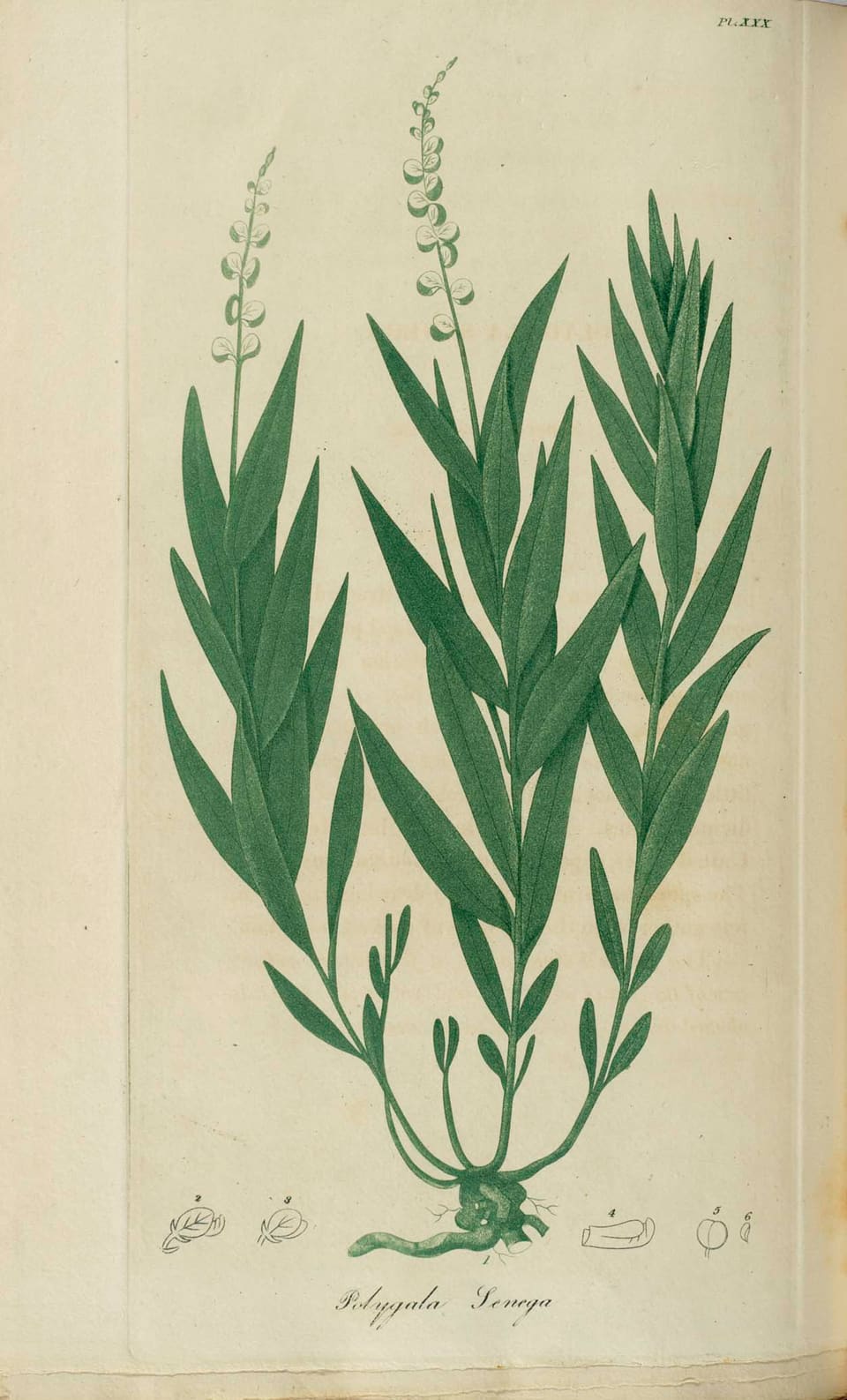
A plate of several upright stems with narrow pointed leaves, each tipped with a slim spike of small greenish-white flowers, above a knotted root.
IllustrationuwdigitalcollectionsCC BY 2.0

About the plant

What it is and where it grows — not part of any germination protocol.

Habit
Perennial, Forb/herbPLANTS Database
Native range
Canada, lower 48 statesPLANTS Database

Toxicity is noted only where a source states it. No note here is not a finding of safety.

Source: PLANTS Database — USDA NRCS.

Worth knowing

This source reports 4 treatments. All are shown.

Protocol 1

DerivedN. C. Deno, 1996

Difficulty High Rated by us, not by the source.

Start around July 4, 2027 for a May 3 last frost. Too late for spring 2027 — that needed starting on July 3, 2026.

  1. Warm moist stratification

    Duration: 90 daysTemperature: 70°F 21°C Light: light

  2. Cold moist stratification

    Duration: 90 daysTemperature: 40°F 4°C

  3. Warm moist stratification

    Duration: 90 daysTemperature: 70°F 21°C Light: dark

about 9 months from start to sowing. Then 6 days to germinate.

41% germination in 2–6 days.

Seed Germination Theory and Practice, 1st Supplement — N. C. Deno, 1996 · 1st Supplement, Polygala p. 67Public domain
Show the original text
Polygala (Polygalaceae). P. senega germ. 70D(2/45)-40(3/45)-70D, 40(5/30)-70(4/30 in 2 d-3 w), and 70L-40-70D(11/27 in 2-6 d), and none in 70 GA-3. The seeds that germ. at 70 were vigorous whereas the seeds that germ. at 40 failed to develop on shifting to 70.
Seed Germination Theory and Practice, 1st Supplement, 1st Supplement, Polygala p. 67. Quoted exactly. Every value on this card comes from this record, except the difficulty rating, which is ours; the step names come from a fixed list.

Protocol 2

DerivedN. C. Deno, 1996

Difficulty High Rated by us, not by the source.

Start around December 15, 2026 for a May 3 last frost.

  1. Cold moist stratification

    Duration: 90 daysTemperature: 40°F 4°C

  2. Warm moist stratification

    Duration: 90 daysTemperature: 70°F 21°C

    4/30 germinated in this phase.

Steps after step 1 run on after germination.

about 3 months from start to sowing. Germination time not stated; 21 days assumed.

17% germination.

Seed Germination Theory and Practice, 1st Supplement — N. C. Deno, 1996 · 1st Supplement, Polygala p. 67Public domain
Show the original text
Polygala (Polygalaceae). P. senega germ. 70D(2/45)-40(3/45)-70D, 40(5/30)-70(4/30 in 2 d-3 w), and 70L-40-70D(11/27 in 2-6 d), and none in 70 GA-3. The seeds that germ. at 70 were vigorous whereas the seeds that germ. at 40 failed to develop on shifting to 70.
Seed Germination Theory and Practice, 1st Supplement, 1st Supplement, Polygala p. 67. Quoted exactly. Every value on this card comes from this record, except the difficulty rating, which is ours; the step names come from a fixed list.

Protocol 3

DerivedN. C. Deno, 1996

Difficulty Very high Rated by us, not by the source.

Start around September 17, 2027 for a May 3 last frost. Too late for spring 2027 — that needed starting on September 16, 2026.

  1. Warm moist stratification

    Duration: 90 daysTemperature: 70°F 21°C Light: dark

    2/45 germinated in this phase.

  2. Cold moist stratification

    Duration: 90 daysTemperature: 40°F 4°C

  3. Warm moist stratification

    Duration: 90 daysTemperature: 70°F 21°C Light: dark

Steps after step 2 run on after germination.

about 6 months from start to sowing. Germination time not stated; 21 days assumed.

7% germination.

Seed Germination Theory and Practice, 1st Supplement — N. C. Deno, 1996 · 1st Supplement, Polygala p. 67Public domain
Show the original text
Polygala (Polygalaceae). P. senega germ. 70D(2/45)-40(3/45)-70D, 40(5/30)-70(4/30 in 2 d-3 w), and 70L-40-70D(11/27 in 2-6 d), and none in 70 GA-3. The seeds that germ. at 70 were vigorous whereas the seeds that germ. at 40 failed to develop on shifting to 70.
Seed Germination Theory and Practice, 1st Supplement, 1st Supplement, Polygala p. 67. Quoted exactly. Every value on this card comes from this record, except the difficulty rating, which is ours; the step names come from a fixed list.

Protocol 4

DerivedN. C. Deno, 1996
  1. Sow and cover

    Temperature: 70°F 21°C

No stated waiting before sowing.

0% germination.

Nothing germinated at 70.

Seed Germination Theory and Practice, 1st Supplement — N. C. Deno, 1996 · 1st Supplement, Polygala p. 67Public domain
Show the original text
Polygala (Polygalaceae). P. senega germ. 70D(2/45)-40(3/45)-70D, 40(5/30)-70(4/30 in 2 d-3 w), and 70L-40-70D(11/27 in 2-6 d), and none in 70 GA-3. The seeds that germ. at 70 were vigorous whereas the seeds that germ. at 40 failed to develop on shifting to 70.
Seed Germination Theory and Practice, 1st Supplement, 1st Supplement, Polygala p. 67. Quoted exactly. Every value on this card comes from this record; the step names come from a fixed list.

Add to My Garden

View species page