Quercus rubra
Red Oak · Northern Red Oak · Champion Oak
Family FagaceaeGenus Quercus
Also published as Quercus borealis. You are in the right place.
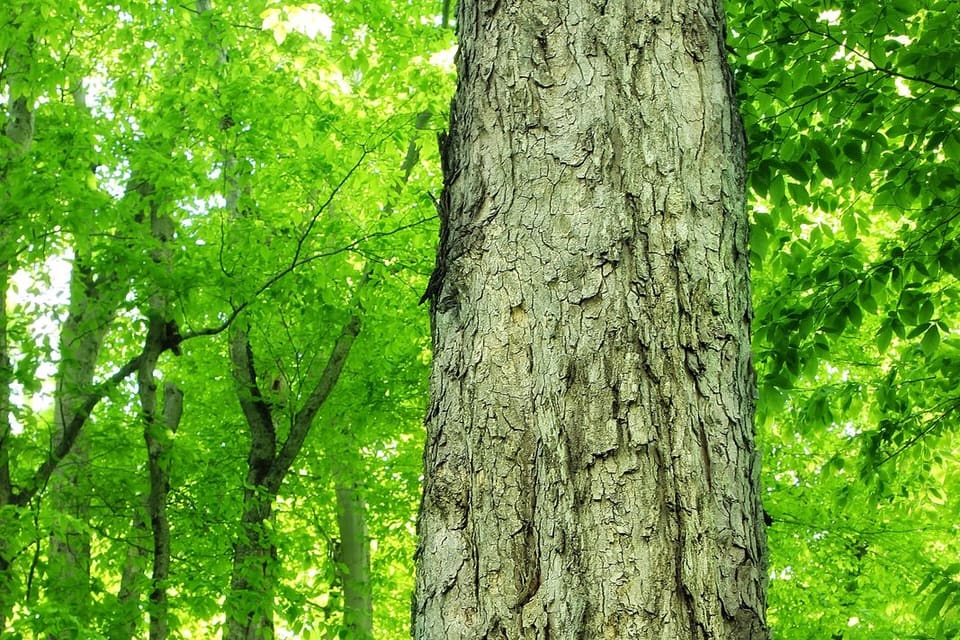 BarkNicholas A. Tonelli from Northeast Pennsylvania, USACC BY 2.0
About the plant
What it is and where it grows — not part of any germination protocol.
Safety
- Toxicity
- Poisonous to horse, cattle. Acorns, young leaves. Gallotannins, quercitrin, and quercitin. Stated for Quercus spp.Plants Poisonous to Livestock
- Toxicity
- Low severity. Leaves, Seeds. Gallotannins, quercitrin, and quercitin.Extension Gardener Plant Toolbox
The plant
- Habit
- TreePlant Finder
- Habit
- Perennial, TreePLANTS Database
- Height
- 50-75 ftPlant Finder
- Height
- 81.0 ftPLANTS Database
- Spread
- 50-75 ftPlant Finder
- Flower
- Insignificant; yellowish-greenPlant Finder
- Flower
- YellowPLANTS Database
- Blooms
- MayPlant Finder
- Blooms
- Mid SpringPLANTS Database
- Native range
- North AmericaGBIF Backbone Taxonomy
- Native range
- Eastern North AmericaPlant Finder
- Native range
- Canada, lower 48 statesPLANTS Database
- Hardiness zones
- 4-8Plant Finder
- Note
- Failures were mostly grub damage, not dormancy. Soaking, holing or peeling the coat changed little.Seed Germination Theory and Practice, 2nd ed.
- Note
- Good autumn colour. Tolerates drought, black walnut and city air. Susceptible to oak wilt.Plant Finder
Growing conditions
- Sun
- Full sunPlant Finder
- Sun
- Shade tolerance: MediumPLANTS Database
- Soil
- Average, dry to medium, acidicPlant Finder
- Moisture
- Dry to mediumPlant Finder
- Moisture
- Moisture use: MediumPLANTS Database
- Watering
- Dry to mediumPlant Finder
Toxicity is noted only where a source states it. No note here is not a finding of safety.
Sources: Plant Finder — Missouri Botanical Garden; PLANTS Database — USDA NRCS; GBIF Backbone Taxonomy — Global Biodiversity Information Facility; Plants Poisonous to Livestock — Cornell University Department of Animal Science; Seed Germination Theory and Practice, 2nd ed. — N. C. Deno; Extension Gardener Plant Toolbox — NC State Extension.
This source reports 5 treatments. All are shown.
Protocol 1
DerivedN. C. Deno, 1993Difficulty Low Rated by us, not by the source.
Start around December 15, 2026 for a May 3 last frost.
- 1
Cold moist stratification
Duration: 90 days · Temperature: 40°F 4°C
Deno gives no length for this period; three months is his standard cycle.
- 2
Warm moist stratification
Temperature: 70°F 21°C
No induction time at all; half the packet up every 2.5 days. A stem with true leaves follows within a month or two. Germination is hypogeal.
about 3 months from start to sowing. Germination time not stated; 21 days assumed.
100% germination.
Every acorn. Induction time zero -- it starts the moment it reaches 70. Deno's clean lot, not the grub-damaged one.
This source doesn't state how long.
Protocol 2
DerivedN. C. Deno, 1993Difficulty Low Rated by us, not by the source.
Start around October 27, 2026 for a May 3 last frost.
- 1
Warm moist stratification
Duration: 90 days · Temperature: 70°F 21°C
10% here. Deno gives no length for this period; three months is his standard cycle.
- 2
Cold moist stratification
Temperature: 40°F 4°C
80% over 8-10 weeks. A stem with true leaves follows within a month or two. Germination is hypogeal.
about 3 months from start to sowing. Then 70 days to germinate.
80% germination in 56–70 days.
10% comes up warm, then 80% in the cold. Starting cold is still better. Deno's clean lot, not the grub-damaged one.
This source doesn't state how long.
Protocol 3
DerivedN. C. Deno, 1993Difficulty Moderate Rated by us, not by the source.
Start around December 22, 2026 for a May 3 last frost.
- 1
Cold moist stratification
Duration: 90 days · Temperature: 40°F 4°C
Deno gives no length for this period; three months is his standard cycle.
- 2
Warm moist stratification
Temperature: 70°F 21°C
33% in the second week. A stem with true leaves follows within a month or two. Germination is hypogeal.
about 3 months from start to sowing. Then 14 days to germinate.
33% germination in 14 days.
The same treatment on a grub-damaged lot: 33% rather than 100%.
This source doesn't state how long.
Protocol 4
DerivedN. C. Deno, 1993Difficulty High Rated by us, not by the source.
Start around November 17, 2026 for a May 3 last frost.
- 1
Warm moist stratification
Temperature: 70°F 21°C
Four of thirteen, over 3-7 weeks. A stem with true leaves follows within a month or two. Germination is hypogeal.
- 2
Cold moist stratification
Duration: 90 days · Temperature: 40°F 4°C
One more of thirteen.
- 3
Warm moist stratification
Temperature: 70°F 21°C
Two more of thirteen.
about 3 months from start to sowing. Then 49 days to germinate.
31% germination in 21–49 days.
Four acorns of thirteen, then one, then two. Most of the rest had been eaten by grubs.
This source doesn't state how long.
Protocol 5
DerivedN. C. Deno, 1993Difficulty Moderate Rated by us, not by the source.
Start around March 15, 2027 for a May 3 last frost.
- 1
Sow outdoors and leave it
Up in March.
No stated waiting before sowing. Germination time not stated; 21 days assumed.
20% germination.
20%, up in March -- and Deno's other outdoor run ended when mice ate the acorns.
This source doesn't state how long.
