Deno’s GardenMy Garden

Dictamnus albus

Genus Dictamnus

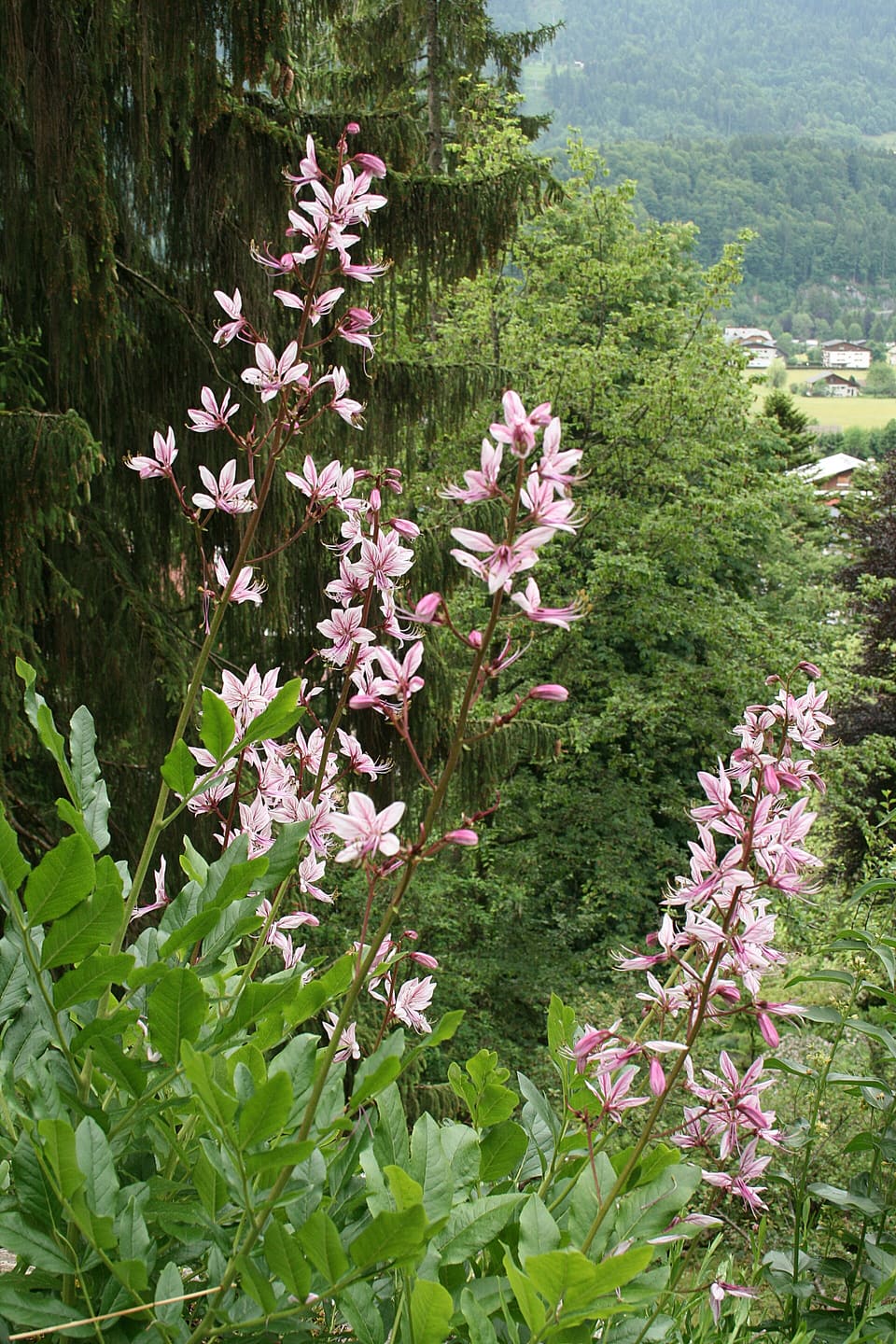
Tall spikes of pink flowers veined darker, rising from glossy pinnate leaves above a wooded valley
The whole plantJean-Pol GRANDMONTCC BY-SA 3.0

About the plant

What it is and where it grows — not part of any germination protocol.

The plant

Habit
Herbaceous Perennial, PerennialExtension Gardener Plant Toolbox
Height
2-3 ft60-90 cmExtension Gardener Plant Toolbox
Spread
1.5-2 ft45-60 cmExtension Gardener Plant Toolbox
Flower
Blue, Pink, Purple/Lavender, WhiteExtension Gardener Plant Toolbox
Blooms
Spring, SummerExtension Gardener Plant Toolbox
Hardiness zones
3-9Extension Gardener Plant Toolbox

Growing conditions

Sun
Full sun; Partial ShadeExtension Gardener Plant Toolbox
Soil
Loam (Silt), Sand, Shallow RockyExtension Gardener Plant Toolbox
Soil pH
Alkaline (>8.0), Neutral (6.0-8.0)Extension Gardener Plant Toolbox
Moisture
Good Drainage, MoistExtension Gardener Plant Toolbox

Toxicity is noted only where a source states it. No note here is not a finding of safety.

Source: Extension Gardener Plant Toolbox — NC State Extension.

This source reports 4 treatments. All are shown.

Protocol 1

DerivedN. C. Deno, 1993

Difficulty Moderate Rated by us, not by the source.

Start around September 22, 2027 for a May 3 last frost. Too late for spring 2027 — that needed starting on September 21, 2025.

  1. Dry storage

    Duration: 180 daysTemperature: 70°F 21°C

  2. Cold moist stratification

    Duration: 90 daysTemperature: 40°F 4°C

  3. Warm moist stratification

    Duration: 90 daysTemperature: 70°F 21°C

    11 germinated in this phase.

  4. Cold moist stratification

    Duration: 90 daysTemperature: 40°F 4°C

  5. Warm moist stratification

    Duration: 90 daysTemperature: 70°F 21°C

about 18 months from start to sowing. Germination time not stated; 21 days assumed.

77% germination.

Seed Germination Theory and Practice, 2nd ed. — N. C. Deno, 1993 · Ch. 20, Dictamnus p. 132Public domain
Show the original text
Dictamnus (Rutaceae). D. alba germ. basically in a 40-70 pattern with additional increments after each additional 40-70 cycles. However, the germination is a bit difficult to define. What happens is that near the end of the 3 m at 40, many of the seeds increase in volume about 50%. This causes splitting of the seed coat. The radicle may also emerge 1-2 mm. at this time, but does not develop further. On shifting to 70 the radicle rapidly elongates in a day or two, and a shoot with leaves (hypogeal) develops within a week. A few more germinations are triggered over the next two weeks, and then the pattern is repeated in the following 40-70 treatment. The germinations were counted as taking place when the radicle started to elongate at 70, but many could have been counted as occuring at the end of the preceding cycle at 40. Both fresh seed and seed DS 6 m at 70 or 40 germ. 70-40-70(53-58% largely on the 2nd d)-40-70(35%). Results were more varied when sown at 40 as shown by 40- 70(6%)-40-70(28%)-40(10%)-70(18%) for fresh seed, 40-70(11%)-40-70(77%) for seed DS 6 m at 70, and 40-70-40(2%)-70(41%) for seed DS 6 m at 40. A set of NPICIE experiments were conducted on seed •DS 12 m at 70 to see how much time was required at 40 before the shift to 10. The times at 40 were 4,18, 12, 16, and 20w with the percent germinations 0, 0, 42%, 64%, and 73% (in 2-6 d) , respectively. Thus at least three months at 40 is required and five months is better. A sample of seed DS 2 y at 70 germ. much like fresh seed.
Seed Germination Theory and Practice, 2nd ed., Ch. 20, Dictamnus p. 132. Quoted exactly. Every value on this card comes from this record, except the difficulty rating, which is ours; the step names come from a fixed list.

Protocol 2

DerivedN. C. Deno, 1993

Difficulty High Rated by us, not by the source.

Start around January 9, 2027 for a May 3 last frost. Too late for spring 2027 — that needed starting on January 8, 2026.

  1. Dry storage

    Duration: 180 days

  2. Warm moist stratification

    Duration: 90 daysTemperature: 70°F 21°C

  3. Cold moist stratification

    Duration: 90 daysTemperature: 40°F 4°C

  4. Warm moist stratification

    Duration: 90 daysTemperature: 70°F 21°C

  5. Cold moist stratification

    Duration: 90 daysTemperature: 40°F 4°C

  6. Warm moist stratification

    Duration: 90 daysTemperature: 70°F 21°C

    35 germinated in this phase.

Steps after step 4 run on after germination.

about 15 months from start to sowing. Then 2 days to germinate.

53% germination in 2 days.

Seed Germination Theory and Practice, 2nd ed. — N. C. Deno, 1993 · Ch. 20, Dictamnus p. 132Public domain
Show the original text
Dictamnus (Rutaceae). D. alba germ. basically in a 40-70 pattern with additional increments after each additional 40-70 cycles. However, the germination is a bit difficult to define. What happens is that near the end of the 3 m at 40, many of the seeds increase in volume about 50%. This causes splitting of the seed coat. The radicle may also emerge 1-2 mm. at this time, but does not develop further. On shifting to 70 the radicle rapidly elongates in a day or two, and a shoot with leaves (hypogeal) develops within a week. A few more germinations are triggered over the next two weeks, and then the pattern is repeated in the following 40-70 treatment. The germinations were counted as taking place when the radicle started to elongate at 70, but many could have been counted as occuring at the end of the preceding cycle at 40. Both fresh seed and seed DS 6 m at 70 or 40 germ. 70-40-70(53-58% largely on the 2nd d)-40-70(35%). Results were more varied when sown at 40 as shown by 40- 70(6%)-40-70(28%)-40(10%)-70(18%) for fresh seed, 40-70(11%)-40-70(77%) for seed DS 6 m at 70, and 40-70-40(2%)-70(41%) for seed DS 6 m at 40. A set of NPICIE experiments were conducted on seed •DS 12 m at 70 to see how much time was required at 40 before the shift to 10. The times at 40 were 4,18, 12, 16, and 20w with the percent germinations 0, 0, 42%, 64%, and 73% (in 2-6 d) , respectively. Thus at least three months at 40 is required and five months is better. A sample of seed DS 2 y at 70 germ. much like fresh seed.
Seed Germination Theory and Practice, 2nd ed., Ch. 20, Dictamnus p. 132. Quoted exactly. Every value on this card comes from this record, except the difficulty rating, which is ours; the step names come from a fixed list.

Protocol 3

DerivedN. C. Deno, 1993

Difficulty High Rated by us, not by the source.

Start around September 22, 2027 for a May 3 last frost. Too late for spring 2027 — that needed starting on September 21, 2025.

  1. Dry storage

    Duration: 180 daysTemperature: 40°F 4°C

  2. Cold moist stratification

    Duration: 90 daysTemperature: 40°F 4°C

  3. Warm moist stratification

    Duration: 90 daysTemperature: 70°F 21°C

  4. Cold moist stratification

    Duration: 90 daysTemperature: 40°F 4°C

    2 germinated in this phase.

  5. Warm moist stratification

    Duration: 90 daysTemperature: 70°F 21°C

about 18 months from start to sowing. Germination time not stated; 21 days assumed.

41% germination.

Seed Germination Theory and Practice, 2nd ed. — N. C. Deno, 1993 · Ch. 20, Dictamnus p. 132Public domain
Show the original text
Dictamnus (Rutaceae). D. alba germ. basically in a 40-70 pattern with additional increments after each additional 40-70 cycles. However, the germination is a bit difficult to define. What happens is that near the end of the 3 m at 40, many of the seeds increase in volume about 50%. This causes splitting of the seed coat. The radicle may also emerge 1-2 mm. at this time, but does not develop further. On shifting to 70 the radicle rapidly elongates in a day or two, and a shoot with leaves (hypogeal) develops within a week. A few more germinations are triggered over the next two weeks, and then the pattern is repeated in the following 40-70 treatment. The germinations were counted as taking place when the radicle started to elongate at 70, but many could have been counted as occuring at the end of the preceding cycle at 40. Both fresh seed and seed DS 6 m at 70 or 40 germ. 70-40-70(53-58% largely on the 2nd d)-40-70(35%). Results were more varied when sown at 40 as shown by 40- 70(6%)-40-70(28%)-40(10%)-70(18%) for fresh seed, 40-70(11%)-40-70(77%) for seed DS 6 m at 70, and 40-70-40(2%)-70(41%) for seed DS 6 m at 40. A set of NPICIE experiments were conducted on seed •DS 12 m at 70 to see how much time was required at 40 before the shift to 10. The times at 40 were 4,18, 12, 16, and 20w with the percent germinations 0, 0, 42%, 64%, and 73% (in 2-6 d) , respectively. Thus at least three months at 40 is required and five months is better. A sample of seed DS 2 y at 70 germ. much like fresh seed.
Seed Germination Theory and Practice, 2nd ed., Ch. 20, Dictamnus p. 132. Quoted exactly. Every value on this card comes from this record, except the difficulty rating, which is ours; the step names come from a fixed list.

Protocol 4

DerivedN. C. Deno, 1993

Difficulty High Rated by us, not by the source.

Start around March 21, 2027 for a May 3 last frost. Too late for spring 2027 — that needed starting on March 20, 2026.

  1. Cold moist stratification

    Duration: 90 daysTemperature: 40°F 4°C

  2. Warm moist stratification

    Duration: 90 daysTemperature: 70°F 21°C

    6 germinated in this phase.

  3. Cold moist stratification

    Duration: 90 daysTemperature: 40°F 4°C

  4. Warm moist stratification

    Duration: 90 daysTemperature: 70°F 21°C

  5. Cold moist stratification

    Duration: 90 daysTemperature: 40°F 4°C

    10 germinated in this phase.

  6. Warm moist stratification

    Duration: 90 daysTemperature: 70°F 21°C

    18 germinated in this phase.

Steps after step 4 run on after germination.

about 12 months from start to sowing. Germination time not stated; 21 days assumed.

28% germination.

Seed Germination Theory and Practice, 2nd ed. — N. C. Deno, 1993 · Ch. 20, Dictamnus p. 132Public domain
Show the original text
Dictamnus (Rutaceae). D. alba germ. basically in a 40-70 pattern with additional increments after each additional 40-70 cycles. However, the germination is a bit difficult to define. What happens is that near the end of the 3 m at 40, many of the seeds increase in volume about 50%. This causes splitting of the seed coat. The radicle may also emerge 1-2 mm. at this time, but does not develop further. On shifting to 70 the radicle rapidly elongates in a day or two, and a shoot with leaves (hypogeal) develops within a week. A few more germinations are triggered over the next two weeks, and then the pattern is repeated in the following 40-70 treatment. The germinations were counted as taking place when the radicle started to elongate at 70, but many could have been counted as occuring at the end of the preceding cycle at 40. Both fresh seed and seed DS 6 m at 70 or 40 germ. 70-40-70(53-58% largely on the 2nd d)-40-70(35%). Results were more varied when sown at 40 as shown by 40- 70(6%)-40-70(28%)-40(10%)-70(18%) for fresh seed, 40-70(11%)-40-70(77%) for seed DS 6 m at 70, and 40-70-40(2%)-70(41%) for seed DS 6 m at 40. A set of NPICIE experiments were conducted on seed •DS 12 m at 70 to see how much time was required at 40 before the shift to 10. The times at 40 were 4,18, 12, 16, and 20w with the percent germinations 0, 0, 42%, 64%, and 73% (in 2-6 d) , respectively. Thus at least three months at 40 is required and five months is better. A sample of seed DS 2 y at 70 germ. much like fresh seed.
Seed Germination Theory and Practice, 2nd ed., Ch. 20, Dictamnus p. 132. Quoted exactly. Every value on this card comes from this record, except the difficulty rating, which is ours; the step names come from a fixed list.

Add to My Garden

View species page