Deno’s GardenMy Garden

Asclepias exaltata

Genus Asclepias

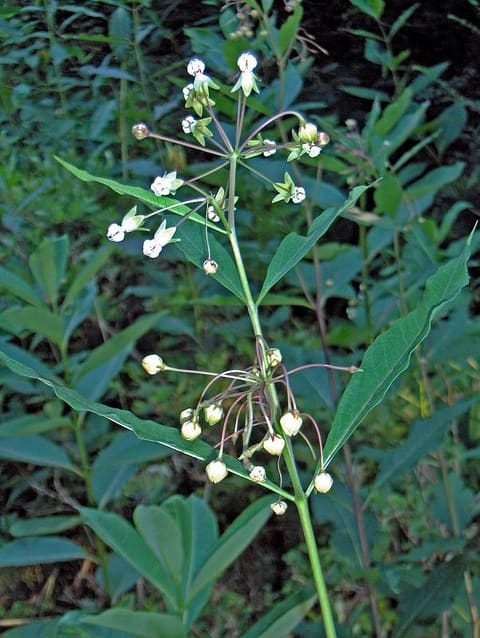
Two drooping heads of pale green and white flowers on long stalks, on a stem with broad pointed leaves
FlowerhomeredwardpriceCC BY 2.0

About the plant

What it is and where it grows — not part of any germination protocol.

The plant

Habit
Herbaceous PerennialExtension Gardener Plant Toolbox
Height
2-7 ft0.6-2.1 mExtension Gardener Plant Toolbox
Spread
0.8-2 ft25-60 cmExtension Gardener Plant Toolbox
Flower
Green, Purple/Lavender, WhiteExtension Gardener Plant Toolbox
Blooms
SummerExtension Gardener Plant Toolbox
Hardiness zones
3-7Extension Gardener Plant Toolbox

Growing conditions

Sun
Dappled Sunlight; Full sun; Partial ShadeExtension Gardener Plant Toolbox
Soil
High Organic MatterExtension Gardener Plant Toolbox
Soil pH
Acid (<6.0), Neutral (6.0-8.0)Extension Gardener Plant Toolbox
Moisture
Good Drainage, MoistExtension Gardener Plant Toolbox

Toxicity is noted only where a source states it. No note here is not a finding of safety.

Source: Extension Gardener Plant Toolbox — NC State Extension.

This source reports 6 treatments. All are shown.

Protocol 1

DerivedN. C. Deno, 1993

Difficulty Moderate Rated by us, not by the source.

Start around October 5, 2027 for a May 3 last frost. Too late for spring 2027 — that needed starting on October 4, 2025.

  1. Dry storage

    Duration: 360 daysTemperature: 70°F 21°C

  2. Cold moist stratification

    Duration: 90 daysTemperature: 40°F 4°C

  3. Warm moist stratification

    Duration: 90 daysTemperature: 70°F 21°C Light: light

about 18 months from start to sowing. Then 8 days to germinate.

100% germination in 4–8 days.

Seed Germination Theory and Practice, 2nd ed. — N. C. Deno, 1993 · Ch. 20, Asclepias p. 103Public domain
Show the original text
Asclepias (Asclepiadaceae). The four species studied have wind born seed indicating that DS is tolerated. This was generally true; but some deterioration on DS was noted in A. phytolaccoides germination is strongly augmented by light as shown by 70L(99% in 8-18 d), 40-70L(100% in 4-8 d), none in 70D, and 40-70D(7%) This was for seed collected in February which had already undergone considerable DS in the seed capsule. Fresher seed collected in November gave a little more germination in the dark as shown by 70-40-70(6%) and 40-70(21%).. Seed DS 12 m at 70 showed the same photorequirements as fresh seed, but the percent germination was reduced to 25% showing that there had been some death of the seed Over this extended DS. Treatment with GA-3 in 70D gave about the same percentage and rate of germination as in 70L.
Seed Germination Theory and Practice, 2nd ed., Ch. 20, Asclepias p. 103. Quoted exactly. Every value on this card comes from this record, except the difficulty rating, which is ours; the step names come from a fixed list.

Protocol 2

DerivedN. C. Deno, 1993

Difficulty Low Rated by us, not by the source.

Start around March 24, 2027 for a May 3 last frost. Too late for spring 2027 — that needed starting on March 23, 2026.

  1. Dry storage

    Duration: 360 daysTemperature: 70°F 21°C

  2. Sow and cover

    Temperature: 70°F 21°C Light: light

about 12 months from start to sowing. Then 18 days to germinate.

99% germination in 8–18 days.

Seed Germination Theory and Practice, 2nd ed. — N. C. Deno, 1993 · Ch. 20, Asclepias p. 103Public domain
Show the original text
Asclepias (Asclepiadaceae). The four species studied have wind born seed indicating that DS is tolerated. This was generally true; but some deterioration on DS was noted in A. phytolaccoides germination is strongly augmented by light as shown by 70L(99% in 8-18 d), 40-70L(100% in 4-8 d), none in 70D, and 40-70D(7%) This was for seed collected in February which had already undergone considerable DS in the seed capsule. Fresher seed collected in November gave a little more germination in the dark as shown by 70-40-70(6%) and 40-70(21%).. Seed DS 12 m at 70 showed the same photorequirements as fresh seed, but the percent germination was reduced to 25% showing that there had been some death of the seed Over this extended DS. Treatment with GA-3 in 70D gave about the same percentage and rate of germination as in 70L.
Seed Germination Theory and Practice, 2nd ed., Ch. 20, Asclepias p. 103. Quoted exactly. Every value on this card comes from this record, except the difficulty rating, which is ours; the step names come from a fixed list.

Protocol 3

DerivedN. C. Deno, 1993

Difficulty High Rated by us, not by the source.

Start around September 17, 2027 for a May 3 last frost. Too late for spring 2027 — that needed starting on September 16, 2026.

  1. Cold moist stratification

    Duration: 90 daysTemperature: 40°F 4°C

  2. Warm moist stratification

    Duration: 90 daysTemperature: 70°F 21°C

about 6 months from start to sowing. Germination time not stated; 21 days assumed.

21% germination.

Seed Germination Theory and Practice, 2nd ed. — N. C. Deno, 1993 · Ch. 20, Asclepias p. 103Public domain
Show the original text
Asclepias (Asclepiadaceae). The four species studied have wind born seed indicating that DS is tolerated. This was generally true; but some deterioration on DS was noted in A. phytolaccoides germination is strongly augmented by light as shown by 70L(99% in 8-18 d), 40-70L(100% in 4-8 d), none in 70D, and 40-70D(7%) This was for seed collected in February which had already undergone considerable DS in the seed capsule. Fresher seed collected in November gave a little more germination in the dark as shown by 70-40-70(6%) and 40-70(21%).. Seed DS 12 m at 70 showed the same photorequirements as fresh seed, but the percent germination was reduced to 25% showing that there had been some death of the seed Over this extended DS. Treatment with GA-3 in 70D gave about the same percentage and rate of germination as in 70L.
Seed Germination Theory and Practice, 2nd ed., Ch. 20, Asclepias p. 103. Quoted exactly. Every value on this card comes from this record, except the difficulty rating, which is ours; the step names come from a fixed list.

Protocol 4

DerivedN. C. Deno, 1993

Difficulty Very high Rated by us, not by the source.

Start around September 22, 2027 for a May 3 last frost. Too late for spring 2027 — that needed starting on September 21, 2025.

  1. Dry storage

    Duration: 360 daysTemperature: 70°F 21°C

  2. Cold moist stratification

    Duration: 90 daysTemperature: 40°F 4°C

  3. Warm moist stratification

    Duration: 90 daysTemperature: 70°F 21°C Light: dark

about 18 months from start to sowing. Germination time not stated; 21 days assumed.

7% germination.

Seed Germination Theory and Practice, 2nd ed. — N. C. Deno, 1993 · Ch. 20, Asclepias p. 103Public domain
Show the original text
Asclepias (Asclepiadaceae). The four species studied have wind born seed indicating that DS is tolerated. This was generally true; but some deterioration on DS was noted in A. phytolaccoides germination is strongly augmented by light as shown by 70L(99% in 8-18 d), 40-70L(100% in 4-8 d), none in 70D, and 40-70D(7%) This was for seed collected in February which had already undergone considerable DS in the seed capsule. Fresher seed collected in November gave a little more germination in the dark as shown by 70-40-70(6%) and 40-70(21%).. Seed DS 12 m at 70 showed the same photorequirements as fresh seed, but the percent germination was reduced to 25% showing that there had been some death of the seed Over this extended DS. Treatment with GA-3 in 70D gave about the same percentage and rate of germination as in 70L.
Seed Germination Theory and Practice, 2nd ed., Ch. 20, Asclepias p. 103. Quoted exactly. Every value on this card comes from this record, except the difficulty rating, which is ours; the step names come from a fixed list.

Protocol 5

DerivedN. C. Deno, 1993

Difficulty Very high Rated by us, not by the source.

Start around June 19, 2027 for a May 3 last frost. Too late for spring 2027 — that needed starting on June 18, 2026.

  1. Warm moist stratification

    Duration: 90 daysTemperature: 70°F 21°C

  2. Cold moist stratification

    Duration: 90 daysTemperature: 40°F 4°C

  3. Warm moist stratification

    Duration: 90 daysTemperature: 70°F 21°C

about 9 months from start to sowing. Germination time not stated; 21 days assumed.

6% germination.

Seed Germination Theory and Practice, 2nd ed. — N. C. Deno, 1993 · Ch. 20, Asclepias p. 103Public domain
Show the original text
Asclepias (Asclepiadaceae). The four species studied have wind born seed indicating that DS is tolerated. This was generally true; but some deterioration on DS was noted in A. phytolaccoides germination is strongly augmented by light as shown by 70L(99% in 8-18 d), 40-70L(100% in 4-8 d), none in 70D, and 40-70D(7%) This was for seed collected in February which had already undergone considerable DS in the seed capsule. Fresher seed collected in November gave a little more germination in the dark as shown by 70-40-70(6%) and 40-70(21%).. Seed DS 12 m at 70 showed the same photorequirements as fresh seed, but the percent germination was reduced to 25% showing that there had been some death of the seed Over this extended DS. Treatment with GA-3 in 70D gave about the same percentage and rate of germination as in 70L.
Seed Germination Theory and Practice, 2nd ed., Ch. 20, Asclepias p. 103. Quoted exactly. Every value on this card comes from this record, except the difficulty rating, which is ours; the step names come from a fixed list.

Protocol 6

DerivedN. C. Deno, 1993
  1. Dry storage

    Duration: 360 daysTemperature: 70°F 21°C

  2. Sow and cover

    Temperature: 70°F 21°C Light: dark

about 12 months from start to sowing.

0% germination.

Nothing germinated at 70.

Seed Germination Theory and Practice, 2nd ed. — N. C. Deno, 1993 · Ch. 20, Asclepias p. 103Public domain
Show the original text
Asclepias (Asclepiadaceae). The four species studied have wind born seed indicating that DS is tolerated. This was generally true; but some deterioration on DS was noted in A. phytolaccoides germination is strongly augmented by light as shown by 70L(99% in 8-18 d), 40-70L(100% in 4-8 d), none in 70D, and 40-70D(7%) This was for seed collected in February which had already undergone considerable DS in the seed capsule. Fresher seed collected in November gave a little more germination in the dark as shown by 70-40-70(6%) and 40-70(21%).. Seed DS 12 m at 70 showed the same photorequirements as fresh seed, but the percent germination was reduced to 25% showing that there had been some death of the seed Over this extended DS. Treatment with GA-3 in 70D gave about the same percentage and rate of germination as in 70L.
Seed Germination Theory and Practice, 2nd ed., Ch. 20, Asclepias p. 103. Quoted exactly. Every value on this card comes from this record; the step names come from a fixed list.

Add to My Garden

View species page